

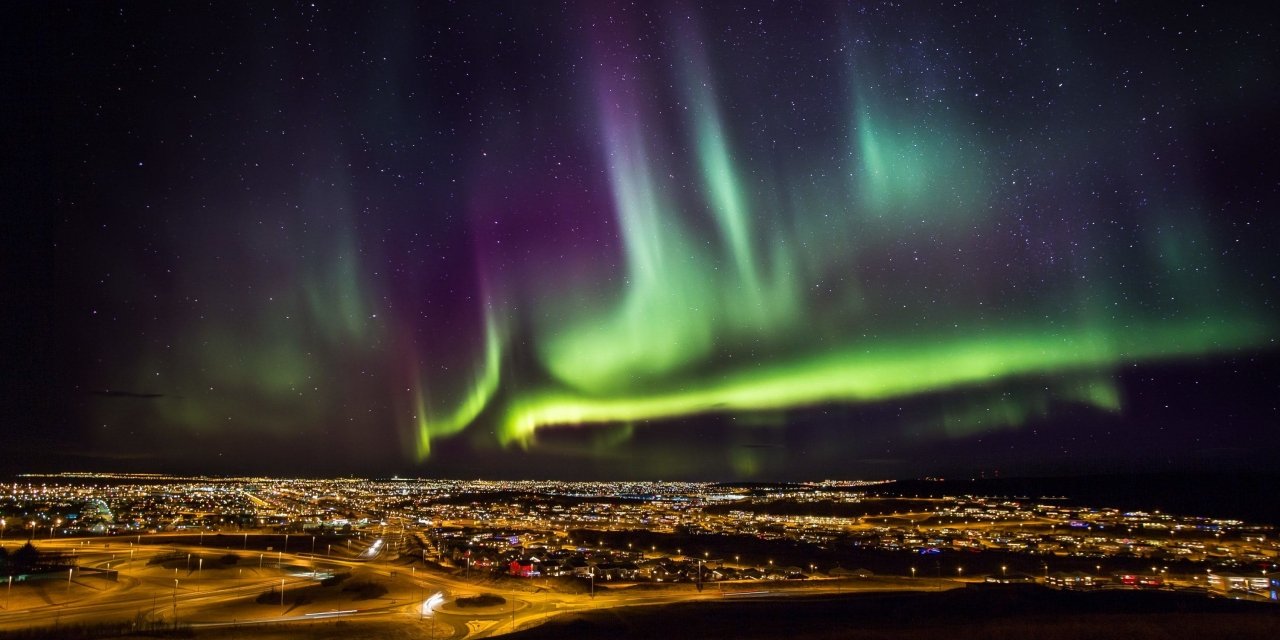
Quick answer
Yes, you can see the northern lights in Reykjavik when geomagnetic activity reaches KP3 or higher and skies are clear. Urban light pollution dims fainter displays, so visibility improves in parks and coastal zones away from downtown streetlights. The optimal viewing window runs from 22:00 to 02:00 between September and March, when darkness lasts long enough for aurora bands to emerge overhead.
Reykjavik records an average of 18 aurora-visible nights per winter season when cloud cover clears and solar wind conditions align. The city's latitude positions it beneath the southern edge of the auroral oval, the ring-shaped zone where charged particles collide with atmospheric gases to produce the characteristic green and red curtains. Light pollution from the capital's 130,000 residents and extensive street grid dims displays rated below KP3 on the planetary geomagnetic scale. During moderate storms—KP4 or KP5—the aurora brightens enough to cut through ambient urban glow, and residents report sightings from residential neighborhoods, the Grotta lighthouse peninsula, and Öskjuhlíð hill. The Icelandic Meteorological Office publishes real-time aurora forecasts at vedur.is, combining cloud-cover predictions with solar wind data from NASA's ACE satellite positioned 1.5 million kilometers upstream from Earth. Visibility depends on three converging factors: geomagnetic activity strength, cloud-free skies, and darkness duration. Between late August and early April, Reykjavik's nights extend beyond six hours, allowing sufficient time for displays to develop. The moon phase matters—full moons wash out fainter bands, while new-moon periods preserve contrast. Atmospheric conditions shift rapidly in Iceland's maritime climate, so forecasts issued more than six hours in advance carry limited reliability. The aurora appears as a diffuse green arc low on the northern horizon during weak activity, expanding overhead into rippling curtains when particle flux intensifies. Pink and purple fringes emerge above 200 kilometers altitude when oxygen atoms at lower densities emit red wavelengths. Displays typically last 20 to 40 minutes before fading, though active nights produce multiple phases separated by quiet intervals. The phenomenon operates on its own schedule—no admission window applies, only the requirement for darkness and clear skies coinciding with solar storms.
“Reykjavik records an average of 18 aurora-visible nights per winter season when cloud cover clears and solar wind conditions align.”
When Can You See The Northern Lights In Reykjavik?
To view the aurora borealis in Reykjavik, you require complete darkness and clear skies. The optimal arrival window for potential visibility is 22:00–02:00.
Late Autumn
Moderate crowdsAverage 0°C to 5°C. Longer nights increase observation opportunities.
Midwinter
Low crowdsAverage -2°C to 3°C. Maximum darkness provides the longest viewing window.
Early Spring
Moderate crowdsAverage -1°C to 4°C. Declining darkness limits the viewing season after March.
Verdict: The best opportunity occurs between late September and March, specifically during the 22:00–02:00 window when skies are clear.
How To Navigate Where You Can See The Northern Lights In Reykjavik
Reykjavik is located at Reykjavik, Iceland. While sightings are possible within the city limits, moving to darker outskirts significantly improves visibility by reducing light pollution.
Strætó city bus network to public outskirts
Driving towards Grotta or Heiðmörk
Walking to coastal paths like Ægisíða
Public Spots Where You Can See The Northern Lights In Reykjavik
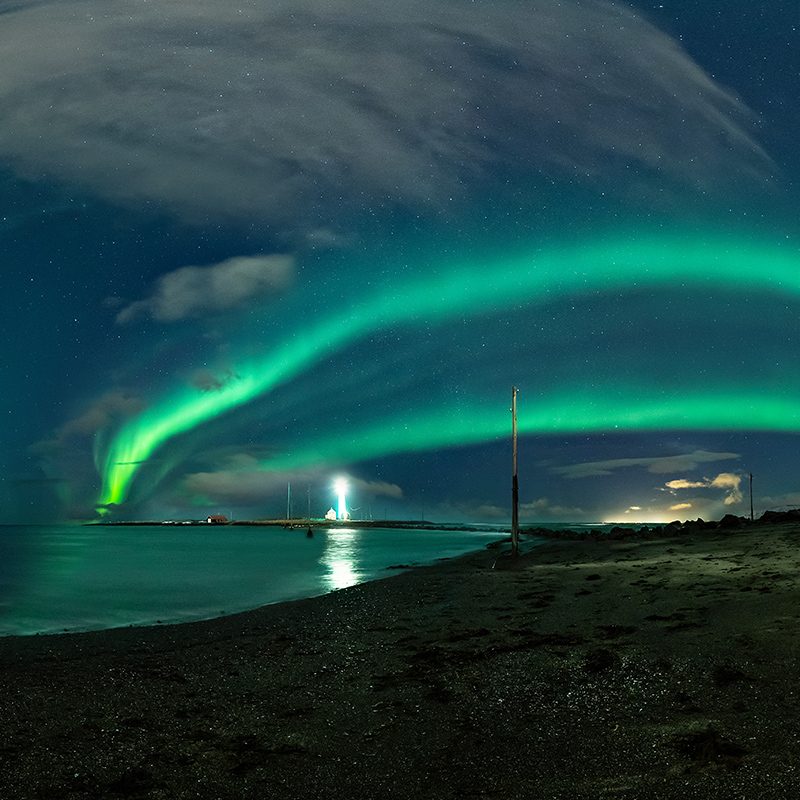
Grótta Lighthouse
Position your camera facing the lighthouse to capture the aurora reflected in the tidal pools. This coastal area offers minimal light pollution compared to the city center.
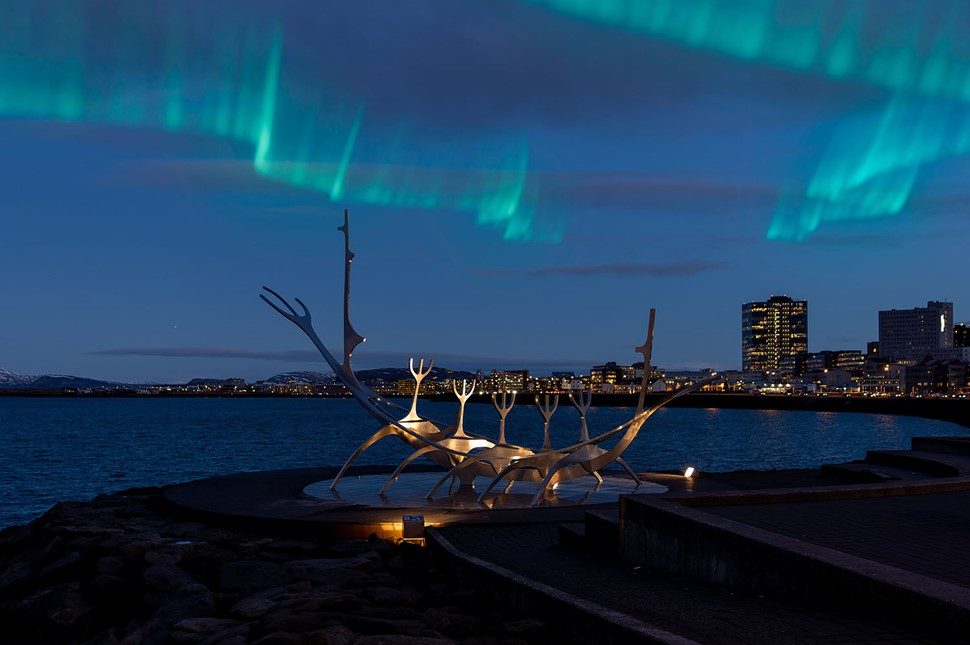
Sun Voyager Sculpture
Compose the steel structure against the northern sky to frame the lights behind the iconic monument. It sits along the coastline with clear views toward the bay.
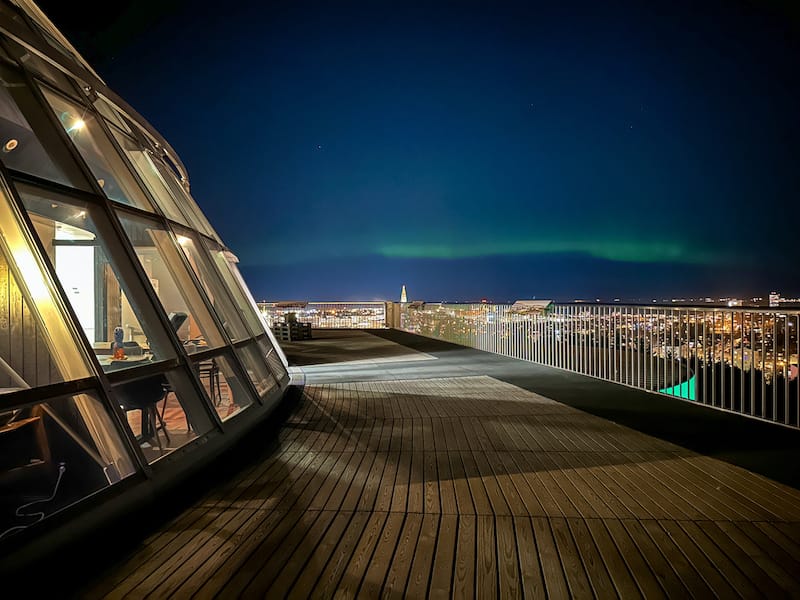
Perlan Observation Deck
Use the elevated platform for an expansive 360-degree view of the horizon away from ground-level obstructions. The rotating glass dome provides a vantage point above the city lights.
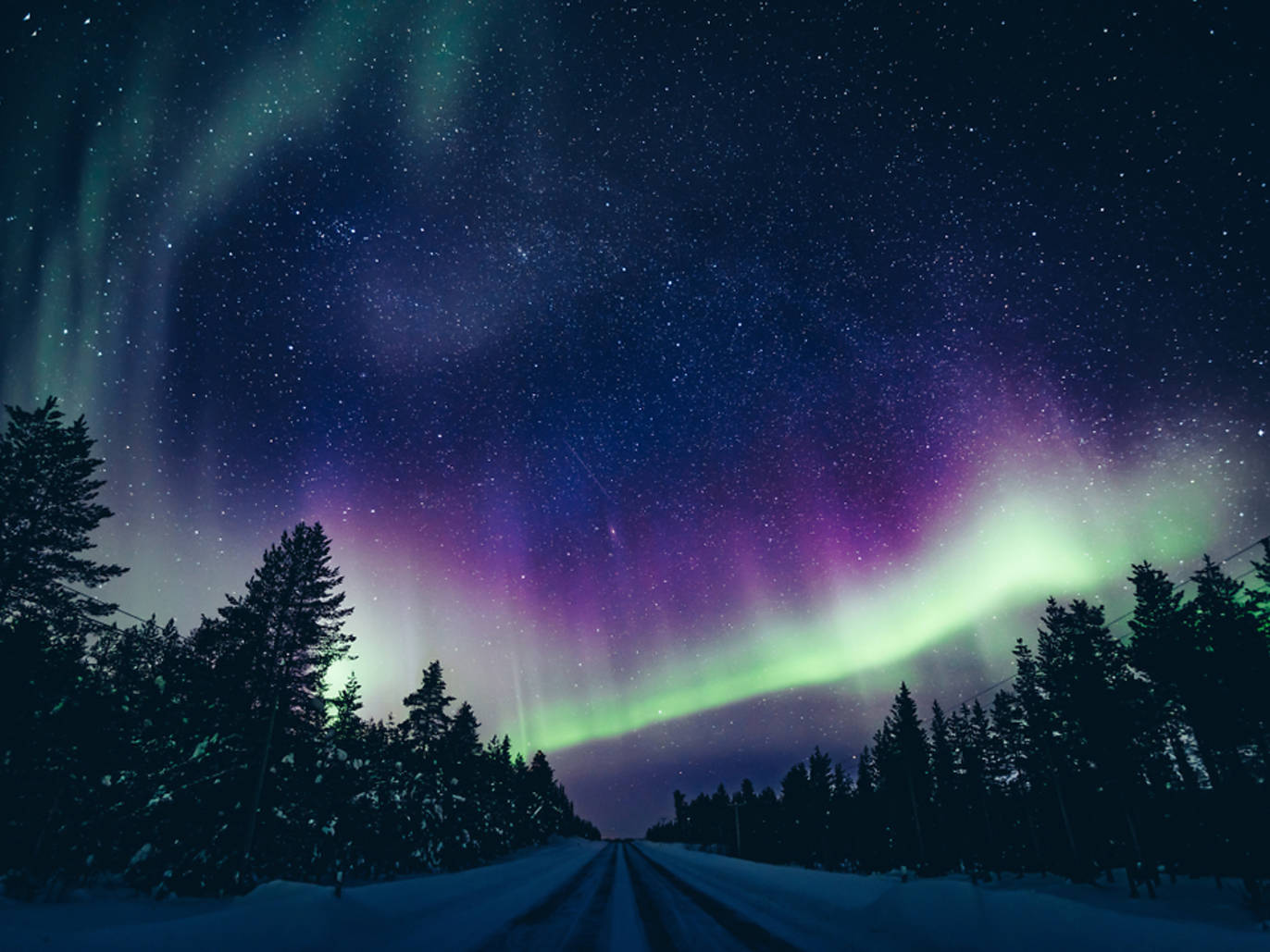
Öskjuhlíð Forest
Capture the aurora through gaps in the trees for a natural framing effect in this wooded park. The paths wind through darker areas that help preserve your night vision.
Mistakes To Avoid If You Want To See The Northern Lights In Reykjavik
Most visitors underestimate how city light affects aurora visibility and fail to check real-time conditions. These mistakes turn a potential sighting into a wasted night.
Not checking the aurora forecast before going out
Visit https://www.vedur.is and confirm the KP index is 3 or above and cloud cover is minimal. The forecast updates hourly and determines whether you'll see anything at all.
Staying in the bright city center expecting clear views
Move to Grótta lighthouse, Öskjuhlíð hill, or the eastern shoreline where artificial light is reduced. Even moderate street lighting washes out faint auroras.
Assuming any dark night will show auroras
The northern lights require solar activity, not just darkness. Check the forecast even if skies are clear—no geomagnetic activity means no auroras regardless of conditions.
Giving up after fifteen minutes in one location
Aurora intensity fluctuates. Stay at your viewing spot for at least an hour and let your eyes adjust to darkness for 20–30 minutes before deciding the forecast was wrong.
Preparation Checklist To See The Northern Lights In Reykjavik
Preparation increases your chances of seeing the lights from Reykjavik's city limits.
-
Download the Icelandic Met Office aurora forecast app — Real-time KP index and cloud-cover data help you pick the right night.
-
Check vedur.is cloud predictions before heading out — Clear skies are non-negotiable; even strong auroral activity is invisible through cloud.
-
Dress in insulated layers and waterproof outer shell — Temperatures drop below freezing and coastal wind magnifies the chill during multi-hour waits.
-
Bring a tripod and camera with manual settings — Long exposures (10–30 seconds) capture faint auroras invisible to the naked eye.
-
Identify a dark spot away from street lighting — Perlan hill, Grótta lighthouse, and Seltjarnarnes reduce light pollution without leaving the capital area.
-
Allow 30–90 minutes of continuous sky-watching — Auroras appear in waves; brief checks often miss active intervals.
Check availability
Common Questions: Can You See the Northern Lights in Reykjavik?
Everything you need to know about can you see the northern lights in reykjavik